
The PSTN Switch-Off 2027: What UK Businesses Need to Do Before 31 January 2027
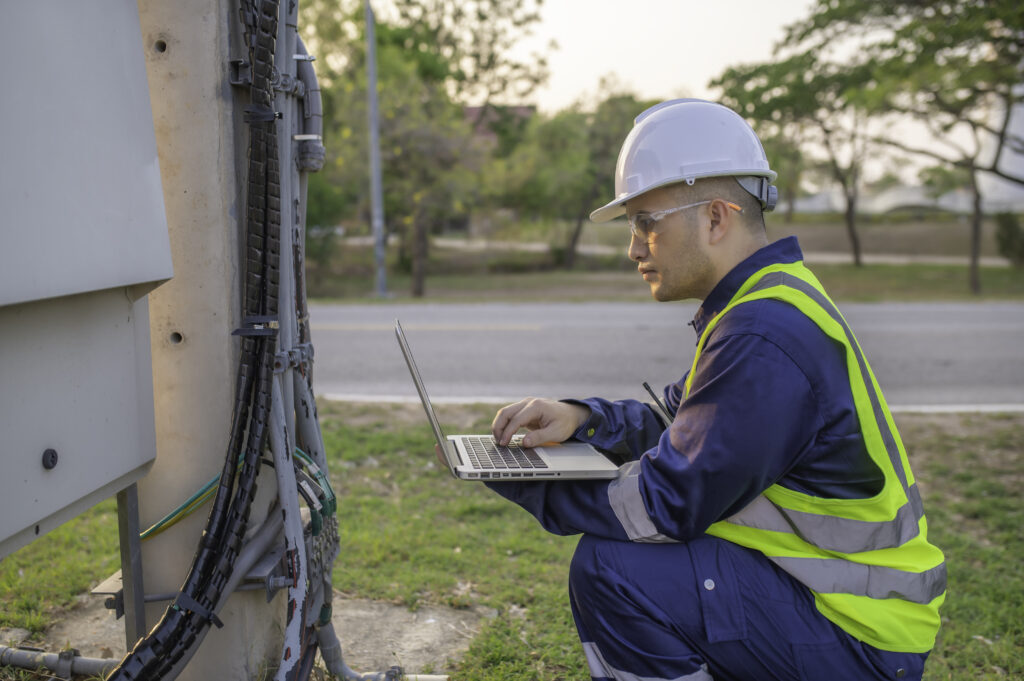
PSTN switch off 2027 UK business fibre migration

If your business still relies on a traditional phone line, an ISDN system, or broadband running over copper, the countdown has started. Openreach has confirmed the UK’s Public Switched Telephone Network (PSTN) will be permanently switched off on 31 January 2027 — and the date will not move again. 

This isn’t a niche telecoms issue. Alarms, lifts, door entry systems, payment terminals and older broadband connections often quietly depend on the same copper wiring as your phone line. As of May 2026, roughly 2.4 million UK lines still needed to migrate, around half a million serving business premises. 

Here’s what’s changing, why waiting is getting more expensive, and how to migrate without disruption. 

1. The Switch-Off at a Glance

Before covering each threat individually, it is worth understanding the overall picture. The table below summarises the six most significant cyber threats facing UK SMEs in 2026 — their prevalence, how they typically get in, and what they tend to cost: 

MilestoneDateWhat It Means
National "stop sell"5 Sept 2023No new analogue or ISDN lines can be ordered
Wholesale price risesApr–Oct 2026Copper line rental rising in stages — up to double by year end
Full PSTN & ISDN switch-off31 Jan 2027All analogue and ISDN2/30 lines permanently disconnected
ADSL & FTTC broadbandWithdrawn with the lineBroadband sharing that copper line stops working too

2. What's Actually Being Switched Off

  • Analogue phone lines — the standard dial-tone line used by phones and older PBX systems 
  • ISDN2 and ISDN30 — digital lines many office phone systems still run on 
  • ADSL and FTTC broadband — connections that share the same copper as your phone line 

If any of these describe your setup, you’ll need a fully digital, IP-based alternative before the switch-off — not after. 

📡 Not sure what your current line runs on? 

3. The Hidden Risk Most Businesses Miss

The part that catches businesses out is rarely the phone on the desk — it’s the equipment quietly wired into the same line: 

  • Intruder and fire alarms that dial out over a phone line 
  • Lift emergency phones and door entry systems 
  • Card payment (PDQ) terminals still running on analogue or ISDN 
  • CCTV systems with a telephone-line backhaul 

4. Why Waiting Is Getting More Expensive

Openreach’s wholesale price rises on copper services are already under way, ahead of the final deadline: 

  • April 2026 — 20% wholesale price increase 
  • July 2026 — a further 40% increase 
  • October 2026 — an additional 40% increase due 

Wholesale charges will roughly double across 2026 — costs typically passed on to your business. Migrating early avoids both the last-minute scramble and the rising bill. 

💷 Every quarter you wait, copper line rental gets more expensive. 

5. What to Migrate To

Current SetupRecommended ReplacementBest For
Analogue line / basic broadbandSoGEA or full-fibre (FTTP)Small offices, single-site businesses
ISDN2/ISDN30 phone systemSIP trunking or Teams-based callingBusinesses with an existing PBX
Multiple sites, uptime-criticalLeased line with SD-WANHead offices, cloud-reliant businesses

6. Don't Forget Resilience

An analogue line was powered from the exchange, so it worked in a power cut. Digital, IP-based services don’t — unless you plan for it: 

  • Battery backup for critical digital phone equipment 
  • A secondary connection (4G/5G or a second line) for automatic failover 
  • A resilience check for alarms, lifts and payment terminals, not just the main office line 

🔌 Digital lines don’t survive a power cut the way copper did. 

7. A Practical Migration Timeline

StageTimingWhat Happens
DiscoveryMonth 1Audit every device connected to copper
Decide & orderMonth 1–2Choose fibre, SIP, or leased line; place orders
Pilot & migrateMonth 2–4Test on one site, then roll out in waves
DecommissionMonth 5Remove old equipment, confirm failover works

Frequently Asked Questions

Is 31 January 2027 definitely final?

Yes. The original December 2025 deadline was pushed back once; Openreach has confirmed the new date will not move again. 

No — in almost all cases your existing number ports across to a digital service. 

A single-site business can migrate in a few weeks. Multi-site or SIP/leased line projects typically need three to five months. 

Final Thoughts

This is a fixed deadline with rising costs attached to every quarter of delay. Most businesses aren’t caught out by the main office line — it’s the alarm system, the lift phone, or the card machine nobody’s thought about since it was installed. 

Sentinel SecureTech is based in Birmingham and supports businesses UK-wide through this migration — start with a free connectivity audit and we’ll map every copper-dependent service and a fixed-price path off it. 

Key Takeaways

  1. The UK’s PSTN and ISDN network is permanently switched off on 31 January 2027 — confirmed final by Openreach. 
  2. As of May 2026, around 2.4 million UK lines still needed to migrate, half a million of them business lines. 
  3. Alarms, lifts, door entry and payment terminals often run on copper and are commonly overlooked. 
  4. Openreach wholesale copper prices are rising through 2026 in three stages — waiting costs more. 
  5. Replacements include full-fibre/SoGEA broadband, SIP trunking or cloud calling, and leased lines with SD-WAN. 
  6. Digital services don’t survive a power cut like analogue did — backup connectivity should be part of every migration. 

Connectivity Insight from Sentinel SecureTech 

Migrating ahead of the deadline is a chance to fix the single points of failure copper lines always had — not just replace them with something newer. 

Scroll to Top